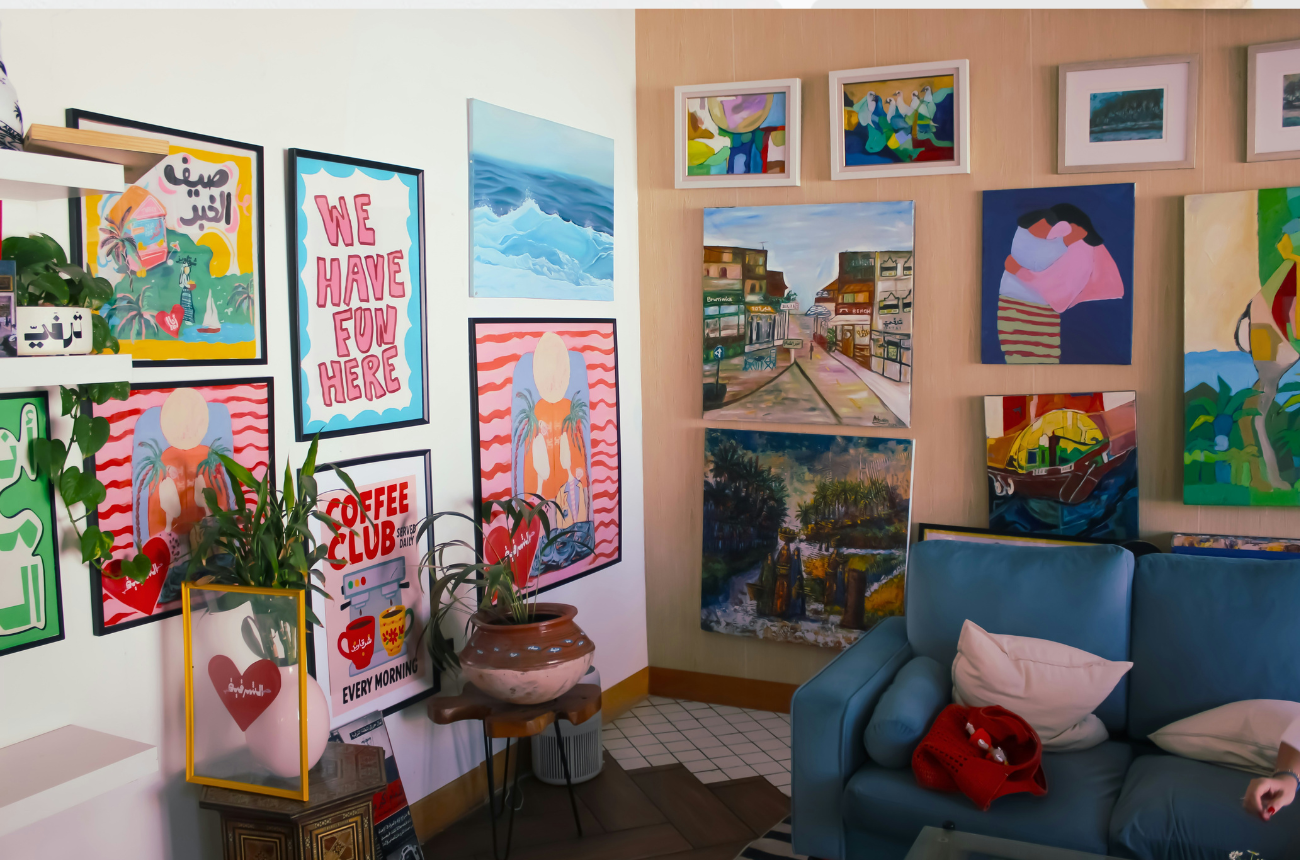

Starting an Etsy shop is easy. Starting one that gets found, makes sales and leaves you with an actual profit takes a little more planning.
Etsy remains one of the biggest marketplaces for independent sellers, with tens of millions of active buyers looking for products they won't necessarily find at a traditional retailer. That makes it especially interesting for artists, designers, small brands and print-on-demand sellers.
But Etsy has changed since this guide was first published in 2024.
Seller requirements have changed, Etsy has introduced stricter rules around originality and production partners, and its search system has moved away from the old strategy of stuffing as many keywords as possible into a listing title.
Here's how to start an Etsy shop in 2026, from choosing what to sell to creating listings and fulfilling your first orders.
What has changed on Etsy since 2024?
If you're following an older Etsy tutorial, there are a few changes worth knowing about.
New shops may pay a setup fee. Etsy now charges some new sellers a one-time, non-refundable setup fee. The exact amount varies and is shown during the onboarding process.
Etsy is stricter about originality. Products need to follow Etsy's Creativity Standards. If you're using print on demand, you should still be the creative force behind the product.
Production partners must be disclosed. If another company prints or manufactures your products, Etsy requires you to add them as a production partner.
Etsy SEO has changed. Keyword-packed titles are no longer the goal. Etsy now looks more holistically at the title, description, tags, attributes, images and other listing information.
In short, Etsy wants listings that are easier for buyers to understand.
That's good news if you hate titles that look like someone emptied an SEO keyword spreadsheet into one sentence.
1. Decide what you want to sell
Before creating the shop, decide what the shop is actually about.
A broad category like wall art is a starting point, not necessarily a niche.
You could narrow it down to something like:
- Retro travel posters
- Minimalist architecture prints
- Personalized pet portraits
- Motorsport posters
- Nursery wall art
- Botanical prints
- Abstract geometric art
You don't need to lock yourself into one tiny category forever.
But having a recognizable direction makes your shop easier to understand and your products easier to market.
It also helps when you're designing your first collection. Instead of creating three completely unrelated products, try to think of a style or audience that could reasonably support 10, 20 or even 50 designs.
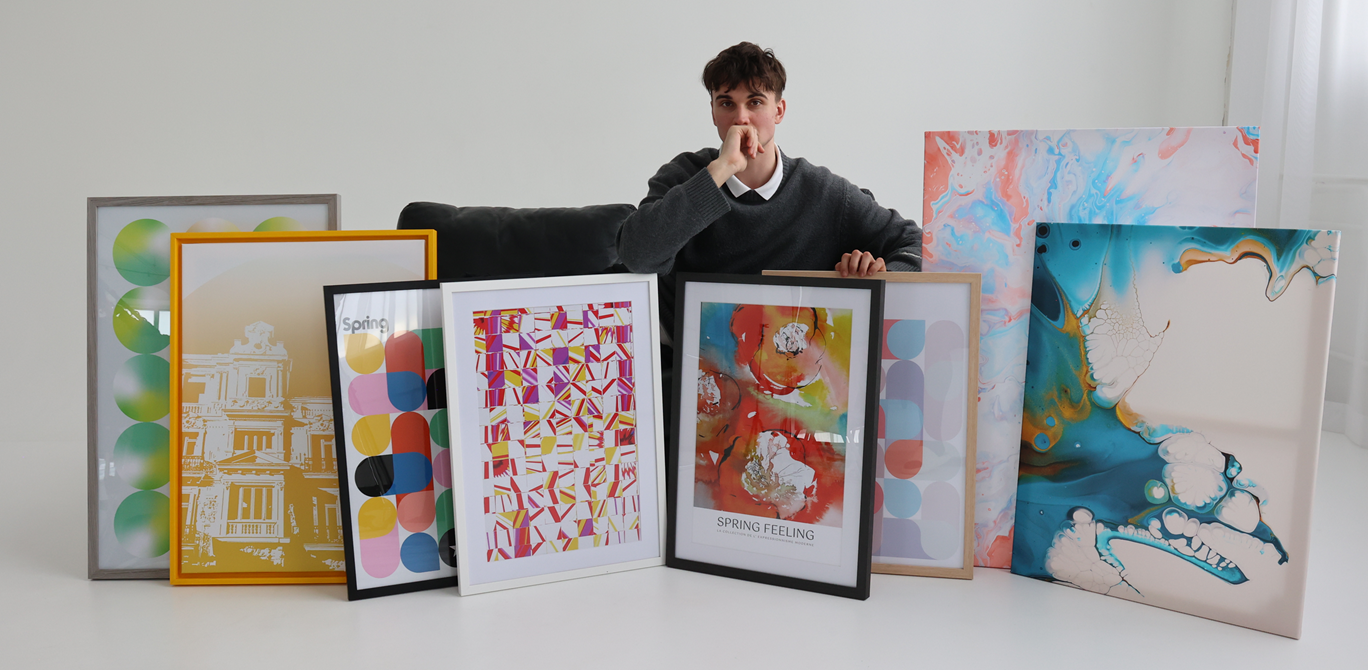
Research Etsy before designing
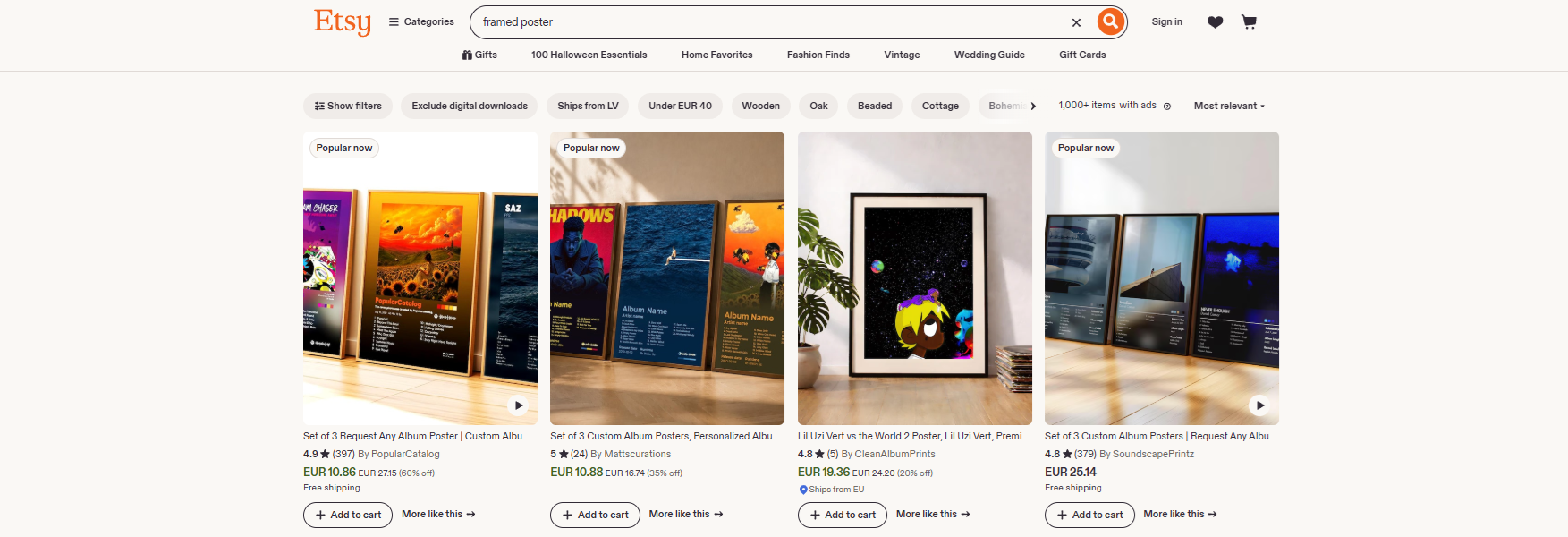
Search Etsy for the products you're thinking about selling.
Look at:
- Pricing - you can check out Printseekers prices here.
- Product styles
- Reviews
- Listing images
- Available sizes
- Shipping times
- Common keywords
- Bestsellers
- What customers complain about
You're not looking for products to copy.
You're trying to understand what buyers already expect and where there might be room to do something better.
If every result on the first page looks almost identical, that's useful information too.
Ask yourself why somebody would choose your version.
2. Create your Etsy shop
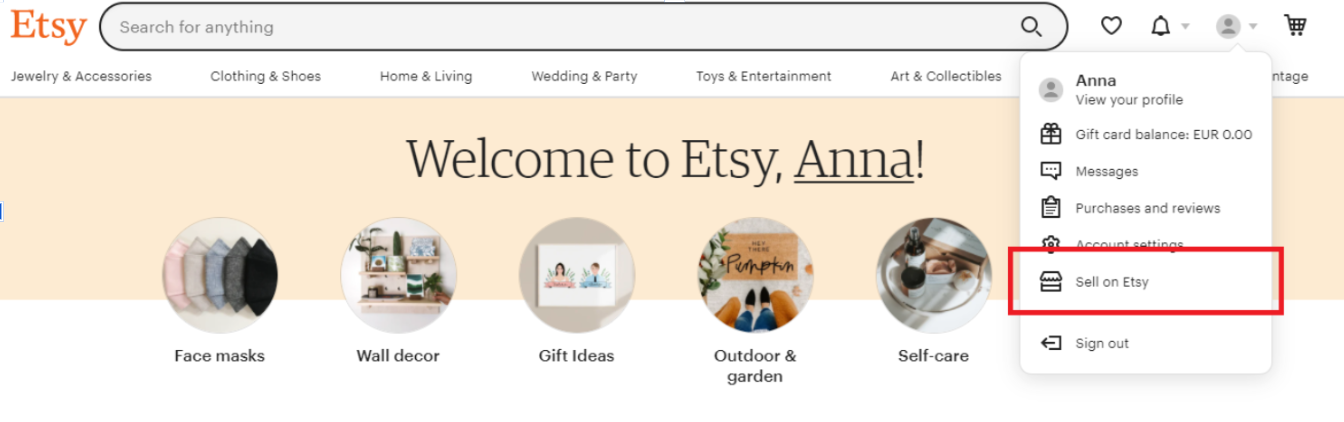
Create an Etsy account and choose the option to start selling.
Etsy will guide you through the initial setup, including your:
- Shop language
- Country
- Currency
- Shop name
Your shop name doesn't have to describe every product you sell.
Something like Northline Studios gives you more room to grow than something extremely specific like MinimalistBlackPosterShop.
Try to choose something that is:
- Easy to remember
- Easy to spell
- Distinctive
- Suitable for a brand
- Available on the social platforms you want to use
Avoid names containing trademarks, celebrity names, brands or copyrighted characters you don't have permission to use.
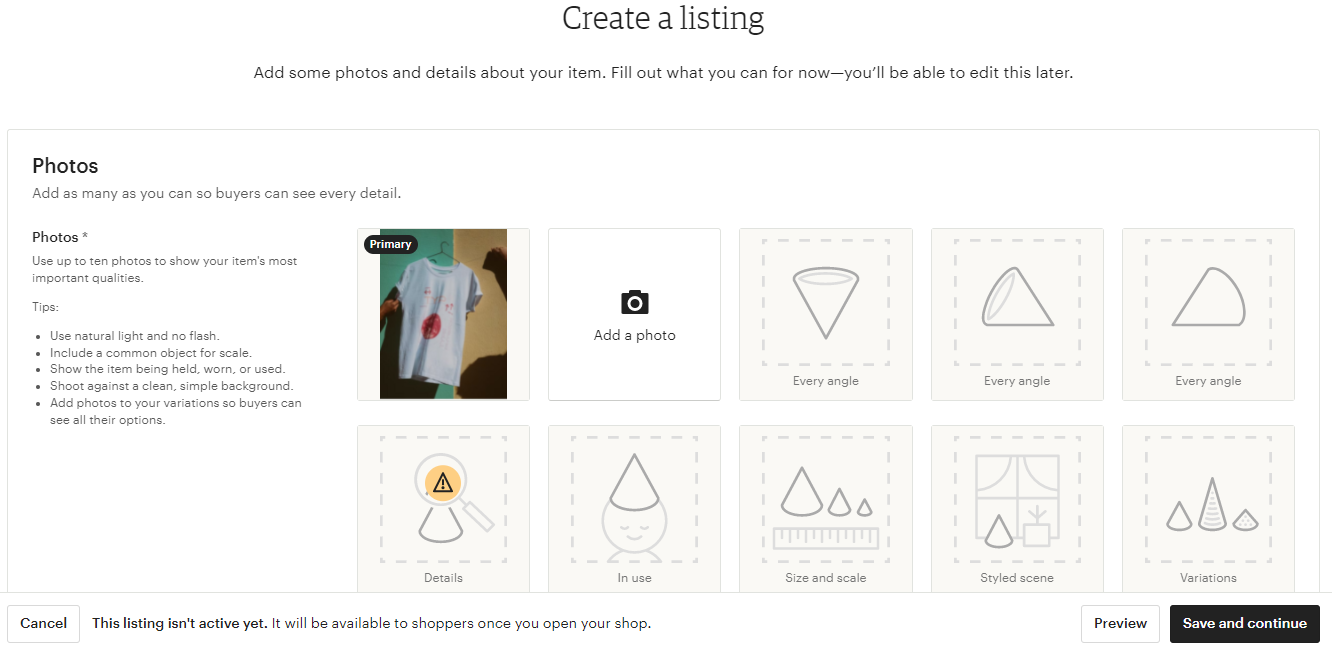
3. Create your first Etsy listing
You'll need at least one product listing before your shop is ready to open.
Your listing includes things like:
- Product images
- Title
- Description
- Price
- Variations
- Tags
- Attributes
- Shipping information
This is one of the most important parts of your Etsy shop.
Most buyers won't discover your homepage first. They'll discover one of your products.
Use strong product images
Your first image needs to make somebody stop scrolling.
For wall art, that could be a clean room mockup where the artwork is immediately visible.
Then use the rest of your images to answer questions.
For example:
- Show the complete artwork
- Show it inside a room
- Show a close-up of the print
- Show the paper or canvas texture
- Show available frame colors
- Show different sizes
- Include a size comparison
- Show packaging
- Include a real product photo
Mockups are useful because they help buyers imagine the product in their own space.
But real sample photography adds another layer of trust.
If possible, use both.
4. Write Etsy titles for 2026 search
This is one area where older Etsy advice has aged badly.
You used to see titles like:
Modern Wall Art Poster Minimalist Print Living Room Decor Abstract Wall Art Gift Bedroom Poster
Technically, there are plenty of relevant keywords in there.
Practically, it looks terrible.
Etsy's newer guidance favors titles that clearly explain what the product is rather than repeating every possible search phrase.
A better title might be:
Minimalist Bauhaus Art Print, Red Geometric Poster
It tells the buyer what they're looking at without turning the title into a keyword dump.
Your tags, attributes and description can provide additional context.
Use your tags properly
Tags are still useful. Instead of repeating almost the same keyword several times, use different phrases buyers could realistically search for.
For a Bauhaus-style print, that might include:
- bauhaus poster
- geometric wall art
- modern art print
- red wall decor
- gallery wall print
- mid century poster
- abstract poster
Think about different ways someone could describe the same product.
You can target the product, style, room, aesthetic, subject or occasion.
Fill in relevant Etsy attributes too.
The more clearly Etsy understands what you're selling, the easier it is to match the listing with the right buyer.
5. Write a useful product description
Don't make the customer search through six paragraphs to figure out whether the frame is included.
Start with the information that actually matters.
For a poster, that could include:
- Material
- Finish
- Sizes
- Whether a frame is included
- Printing method
- Production time
- Shipping
- Packaging
- Personalization options
Then you can add more context about the artwork or your brand.
Your description should answer the questions someone would normally ask before buying.
Clear descriptions are also useful beyond Etsy search. Search engines and AI shopping tools are increasingly trying to understand products based on structured, factual information.
So write naturally and be specific.
6. Understand Etsy fees before setting your price
One of the easiest mistakes when starting an Etsy shop is looking only at what the product costs to make.
Etsy currently charges a $0.20 listing fee and a 6.5% transaction fee when you make a sale. There are also payment processing fees, which vary depending on the country your shop operates from.
Some new sellers may also see a one-time setup fee when opening the shop. And if an order comes through Etsy's Offsite Ads program, an additional advertising fee can apply.
The important part isn't memorizing every percentage. It's understanding that your selling price needs to cover more than production. A basic pricing formula looks something like this:
Product cost + shipping + Etsy fees + marketing costs + profit = selling price
Not:
Printing cost + €5 = selling price
A product can generate plenty of revenue while barely making any profit.
Calculate your margin before launching it.
7. Can you use print on demand with Etsy?
Yes.
Print on demand is allowed on Etsy when you're selling your own original designs and another company helps manufacture the physical product.
Etsy calls that company a production partner.
For example, you can create an original poster and use a printing company to produce and ship it when someone orders.
The important distinction is:
You create the design. Your production partner manufactures it.
You shouldn't take generic products you had no role in creating and present them as your own handmade work.
If you use a production partner, add them to the relevant Etsy listings and be transparent about how your products are made.
How print on demand works with Etsy
The process is simple.
You create the design → the customer orders on Etsy → the production partner prints it → the order ships to the customer.
You don't need to order 100 posters before knowing whether anybody wants them.
Products only need to be produced after somebody buys.
For wall art sellers, that also means one design can potentially be offered as several products.
For example:
- Poster
- Framed poster
- Canvas
- Framed canvas
- Metal print
You can test more products without filling your apartment with inventory.
8. Selling Etsy wall art with Printseekers
If you're planning to sell wall art, Printseekers can handle the production and fulfillment side of your Etsy orders.
Printseekers specializes in print-on-demand wall art, including products such as posters, framed posters, canvas, framed canvas, wallpaper and metal prints.
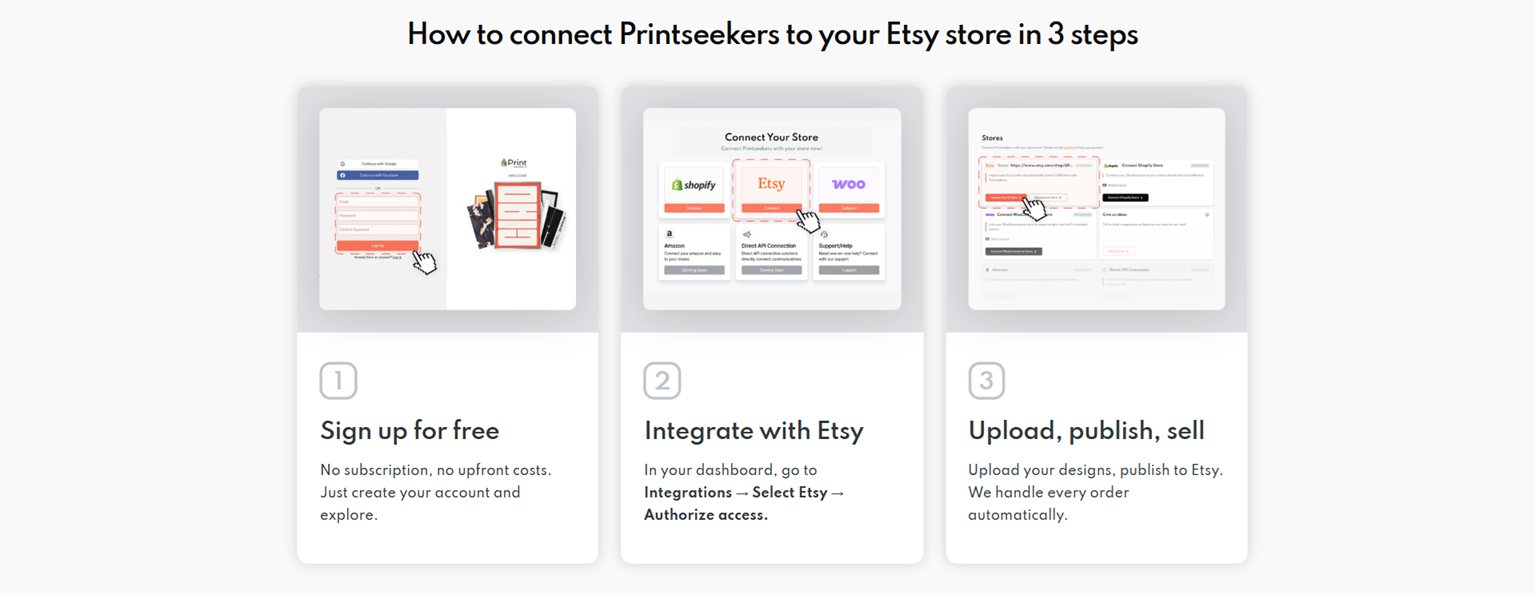
The basic process looks like this:
Create your Printseekers account
You can create an account without paying a monthly subscription.
Connect your Etsy store
Connect your Etsy shop through the Printseekers fulfillment system and authorize the integration.
Add your products and designs
Choose the wall-art product you want to sell and prepare your artwork for the sizes you want to offer.
Start selling
When you receive an Etsy order, it can be processed through the Printseekers fulfillment system.
Printseekers produces and ships it
The order is printed, packed and shipped to your customer.
That means you can concentrate on your products, listings and marketing instead of buying printing equipment or storing inventory.
Order a sample first
Before selling a product, it's worth ordering one yourself.
A screen can't tell you exactly how the paper feels, what the colors look like when printed or how a frame finish looks in a real room.
Samples also give you something else that's valuable on Etsy:
real product photography.
Take your own photos and combine them with your mockups.
You'll understand the product better, and so will your customer.
9. Set realistic shipping expectations
Fast delivery sounds good.
Missing the delivery time you promised doesn't.
If you're using a print-on-demand supplier, remember that there are two separate parts:
Production time + shipping time
Your product first needs to be manufactured before the carrier can deliver it.
Give yourself some breathing room rather than publishing the absolute fastest possible estimate.
It's better for a customer to receive an order earlier than expected than several days later than promised.
Clear shipping expectations can also prevent unnecessary customer service messages later.
10. Finish your Etsy storefront
Before you properly start promoting the shop, finish the rest of your profile.
Add things like:
- Shop logo
- Banner
- About section
- Shop announcement
- Shipping information
- Return policy
- FAQs
- Production partner information
Your shop should feel like a brand rather than a folder containing random listings.
That doesn't mean you need an expensive visual identity.
It just needs to feel consistent and trustworthy.
What should you do after launching?
Publishing the shop isn't the end.
Now you finally start getting useful information.
Watch your Etsy statistics and look at what shoppers actually do.
If a product gets lots of impressions but very few clicks, try changing the first image or title.
If it gets clicks but nobody buys, look at the price, shipping, product presentation or description.
If it gets almost no impressions, your product, keywords or attributes might need work.
Don't change everything at once.
Test things deliberately.
Otherwise, you'll have no idea which change actually helped.
Common mistakes when starting an Etsy shop
Keyword-stuffing titles
You don't need to force every keyword into your product title.
Keep it readable and use tags, attributes and descriptions for additional information.
Ignoring production partner rules
Using a print-on-demand company is allowed.
Just disclose the production partner properly and make sure you're selling your own designs.
Pricing only around production cost
Your margin needs to account for Etsy fees, shipping, ads, replacements and other costs.
Revenue isn't profit.
Using only generic mockups
Good mockups help sell the idea.
Real product photographs help prove the product exists and looks good.
Use both when possible.
Selling copyrighted designs
Using a famous brand, logo, character, musician or sports team without permission can result in listings being removed and potentially cause bigger problems for your shop.
Building a business around somebody else's intellectual property isn't a great long-term strategy.
Selling completely unrelated products
A shop selling nursery posters, memes, phone cases, wedding invitations and car prints doesn't give customers much reason to remember the brand.
Give your shop some direction.
You can expand later.
Frequently asked questions about starting an Etsy shop
How much does it cost to start an Etsy shop in 2026?
Etsy charges $0.20 to publish a listing and may charge new shops a one-time setup fee. After making a sale, you'll also pay Etsy's transaction fee and payment processing fees.
Is Etsy still worth it in 2026?
It can be.
Etsy still has a very large audience actively searching for creative and personalized products.
But simply uploading products isn't enough. Strong product ideas, good images, pricing, SEO and reliable fulfillment all matter.
Is print on demand allowed on Etsy?
Yes. You can use a print-on-demand company to manufacture your original products as long as you follow Etsy's Creativity Standards and disclose your production partner where required.
Do I need inventory to sell on Etsy?
Not if you're using print on demand.
Your product can be manufactured after the customer places an order, which means you don't need to keep stock at home.
Do I need a business license to sell on Etsy?
That depends on where you live and how your business operates.
Local registration, tax and licensing rules vary, so check the requirements in your country or region.
How many Etsy tags should I use?
Use the available tags when they're relevant, but don't fill them with repeated versions of the same phrase.
Use different phrases that describe the product, style, audience, room or occasion.
Can I connect Printseekers to Etsy?
Yes.
Etsy sellers can connect their store to the Printseekers fulfillment system and use Printseekers to handle wall-art production and shipping.
Ready to start your Etsy shop?
Opening the account is the easy part. The shops that grow are the ones that get the fundamentals right: original products, clear listings, realistic pricing and reliable fulfillment.
Start with a focused collection. Order samples. See what people actually click.
Improve what isn't working and expand what is.
And if you're planning to sell wall art without keeping inventory, connect your Etsy shop to Printseekers and let us handle the printing, packing and shipping while you focus on the products.


.png)